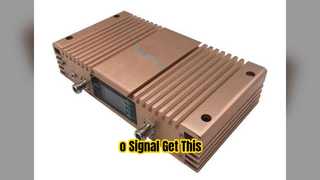
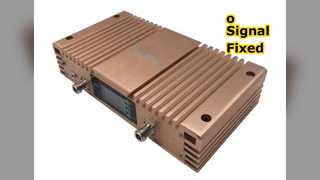
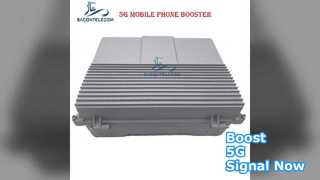
Brief: Follow along for a hands-on demonstration that highlights performance points. This video showcases the GSM 900 Fiber Optical Mobile Signal Repeater in action, explaining how it extends coverage to large areas with weak signals. You'll see how the system uses fiber optic cables to transparently convey and amplify signals between the BTS and mobile users, providing a cost-effective alternative to building new base stations.
Related Product Features:
Extends GSM 900 mobile signal coverage to large areas using fiber optic technology.
Features a Donor Unit and Remote Unit that convert RF signals to laser for transmission.
Supports both Cable-Access and Wireless-Access methods for BTS signal reception.
Offers high system gain and output power with low noise figure for clear signal quality.
Designed for all-weather outdoor installation with IP65-rated weatherproof construction.
Enables remote and local monitoring with automatic fault alarms for easy maintenance.
One Master Unit can support up to eight Remote Units, optimizing cost and installation.
Ideal for areas with existing underground fiber networks, up to 20 km from the BTS.
FAQs:
What is the main purpose of the GSM 900 Fiber Optical Repeater?
It is designed to solve weak mobile signal problems in large coverage areas by amplifying and extending GSM 900 signals via fiber optic cables, providing a cost-effective alternative to installing new base stations.
What are the two types of Fiber Optic Repeaters available?
There are two types: Cable-Access FOR, which receives BTS signal via a direct coupler near the BTS, and Wireless-Access FOR, which uses a donor antenna when no fiber connection is available.
What are the key advantages of using this fiber optic repeater system?
Key advantages include elimination of self-oscillation, pure BTS signal pickup reducing noise, ability to install Remote Units outside BTS coverage, full 360-degree coverage, and no need for additional frequency resources.
What is the maximum distance supported between the BTS and coverage area?
The system is designed for distances of approximately 20 km between the BTS and the area requiring coverage.